 Skip-the-line available
 What to See at the Torre dos Clérigos
The 240-step climb, the 360° view, the elliptical Baroque church and the brotherhood's museum — all on one ticket.
The Torre dos Clérigos is three things in one ticket — a tower to climb, a church to admire, and a museum to explore — and the whole complex is the work of a single architect, Nicolau Nasoni. It's compact enough to see thoroughly in well under an hour, but each part rewards attention. This guide walks through what to see and in what order, so you reach the famous view with energy to spare and don't miss the quieter pleasures of the church and the museum below.
The Tower Climb and the 360° View
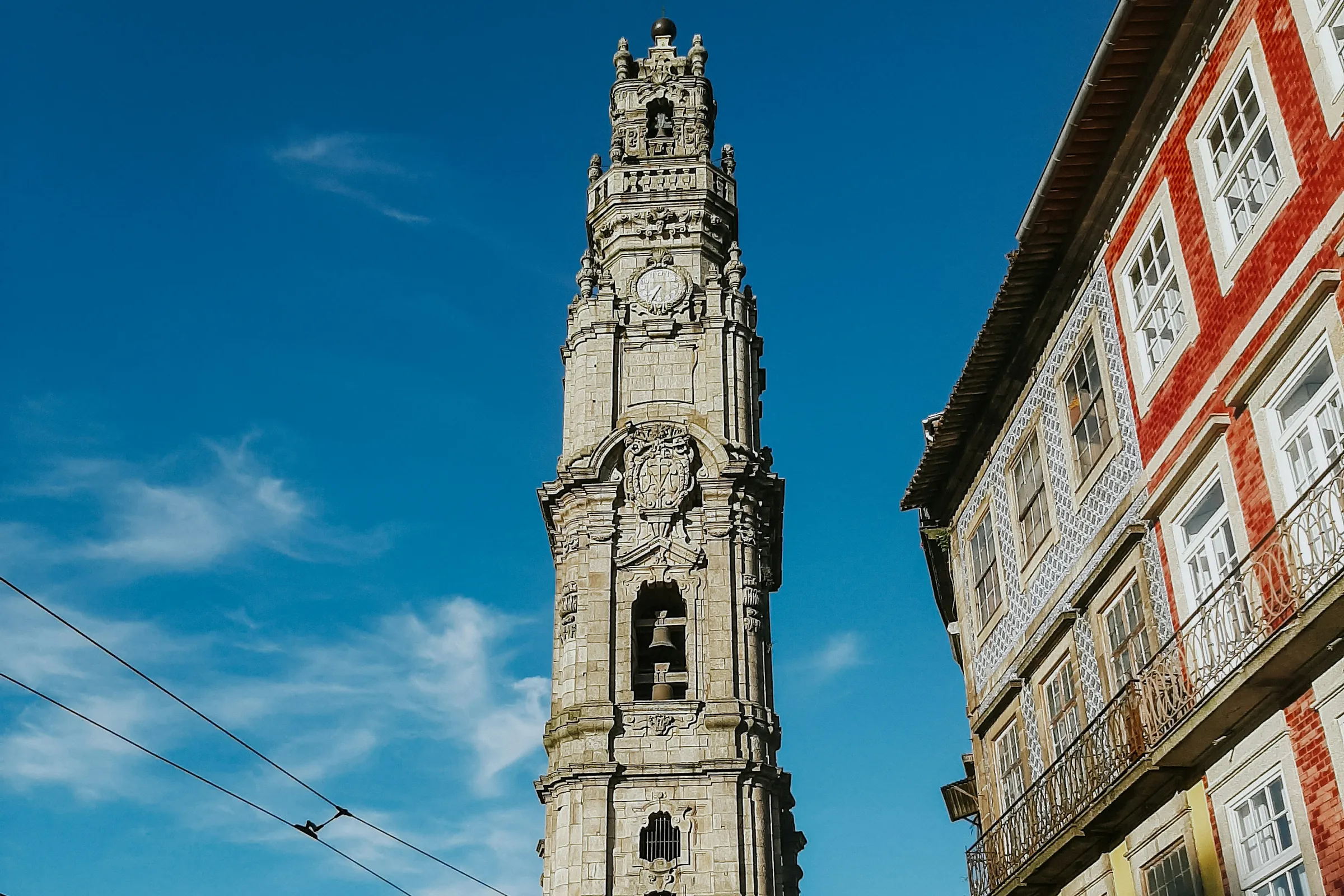
The climb is the centrepiece. Two hundred and forty steps wind up a narrow stone spiral through the six floors of the 75.6-metre tower — steep and tight, with no lift, and worth taking at a steady pace. Pause where the floors allow, and you'll find the effort manageable for most reasonably fit visitors. The reward at the top is a viewing gallery that wraps the tower with an unbroken 360-degree panorama: it's widely considered the best vantage point in Porto, and for many visitors it's the highlight of their whole trip to the city.
From the gallery the city lays itself out beneath you — the terracotta rooftops tumbling toward the Douro, São Bento, the cathedral, the Aliados, the river and its bridges, and, on a clear day, the line of the sea beyond the river mouth. Give it real time and walk the full circuit: the view changes with every side of the tower, and the light transforms it through the day, at its richest in late afternoon and at sunset. This is the one part of the visit nobody should rush — it's why you climbed.
The Elliptical Baroque Church
Below the tower, the Clérigos Church is a small masterpiece of Portuguese Baroque and easy to overlook if you come only for the climb. Built from 1732 to Nasoni's design, it was among the first churches in Portugal laid out on an elliptical plan — an oval nave that gives the interior a flowing, unexpected shape quite unlike a conventional rectangular church. The carved stonework, the gilt and the play of light reward a slow look, and the building forms a single architectural whole with the tower that rises from it.
There's a human story here too. Nicolau Nasoni, the Italian architect who designed the entire complex and shaped so much of Baroque Porto, loved the place so deeply that he asked to be buried in the church crypt; the exact spot is unknown, which lends the building a quiet mystery. Take a few minutes in the church before or after the climb — it sets the tower in context and is, in its own right, one of the finer Baroque interiors in the north of Portugal.
The Brotherhood's Museum
The same ticket includes the museum of the Irmandade dos Clérigos — the brotherhood of clergy that built and still runs the complex. It's a compact, well-curated museum rather than a sprawling one, with a collection of sacred art, paintings, vestments and historical objects that trace the brotherhood's history and the story of the tower and church. It gives the visit depth: you climb the tower for the view, but the museum tells you who built it and why, and how the complex has served Porto's religious and civic life for 250 years.
Because it's small, the museum fits easily into the visit without adding much time — a focused half-hour at most — and it's a good way to round out the experience, especially if you appreciate the history behind the architecture. Together, tower, church and museum make a satisfying whole: a famous view, a beautiful church, and the human story that connects them, all in one ticket and well under an hour if you're moving briskly, or a relaxed hour if you take your time at the top.
How to Order Your Visit
A simple plan works best. If the weather is good and you want the view at its best, save the climb for the warmer light of late afternoon and see the church and museum first; if you've booked a morning slot for a quiet climb, do the tower first while the stair is empty, then come back down to the church and museum at leisure. Either way, the timed slot fixes when you climb, so build the church and museum around it rather than the other way round.
However you order it, allow about 45 to 60 minutes for the complex as a whole and a little extra if you want to linger at the top. Because everything is on one ticket and one small site, there's no rushing between locations — it's all under and within the same Baroque ensemble. The single decision that matters most is the slot you climb in, which is why we book your preferred day and time for you and send a short audio history beforehand so each part of the visit means more.
Frequently asked
What is the must-see at the Torre dos Clérigos?
The climb to the 360-degree viewing gallery — widely considered the best view in Porto. The elliptical Baroque church and the brotherhood's museum below round out the visit, all on one ticket.
What's included in the ticket?
All three parts of the complex: the tower climb, the Clérigos Church and the museum. There's no separate fee for each, and it's a single timed-entry ticket.
Is the church worth seeing?
Yes — it's a fine example of Portuguese Baroque, among the first in the country on an elliptical plan, and it's where the architect Nicolau Nasoni chose to be buried. Don't skip it for the climb alone.
What is in the museum?
Sacred art, paintings, vestments and historical objects telling the story of the Brotherhood of the Clérigos and the complex. It's compact and fits easily into the visit, adding depth and context.
How long do I need?
About 45 to 60 minutes for the tower, church and museum together, plus extra time at the top if you want to take in the view properly, especially at sunset.
Which should I see first?
If the weather is good, save the climb for the better light of late afternoon and see the church and museum first. If you've booked a quiet morning slot, climb first while the stair is empty.
Who designed the Torre dos Clérigos?
The Italian architect Nicolau Nasoni, who designed the whole Baroque complex and shaped much of 18th-century Porto. He's buried in the church crypt at his own request.